![GMG Logo [white]](https://greatermediagroup.net/wp-content/uploads/2025/06/GMG-Logo-white-300x168.png)


Introduction
Churches are posting more than ever before. From Sunday service flyers to sermon clips and event announcements, many ministries are visible online. But visibility alone does not equal impact. In 2026, simply “being online” is no longer enough. Churches must move from random posting to intentional digital discipleship, which is one of the surest way to impact live’s outside of the church building.
A church media strategy is not about trends or aesthetics alone. It is about structure, clarity, and measurable growth. It ensures that every post, video, and caption serves a greater mission. When done correctly, church media becomes an extension of the pulpit, reaching people far beyond the physical building.
This complete guide will walk you through how to build a sustainable, effective, and modern church media strategy that drives engagement, growth, and spiritual impact.
What Is a Church Media Strategy?
A church media strategy is a structured plan that outlines how a ministry communicates its message across digital platforms. It defines goals, target audience, content types, posting frequency, branding, and performance measurement. Instead of posting based on inspiration or urgency, a strategy ensures consistency and direction.
Without strategy, churches often fall into the cycle of posting only event flyers or last-minute announcements. While those are important, they do not build community or deepen engagement. A strategy transforms social media from a notice board into a ministry tool.
In simple terms, strategy answers three important questions: Why are we posting? Who are we trying to reach? What outcome do we expect?
Strategy vs. Random Posting
Random posting focuses on activity. Strategic posting focuses on outcomes. Many churches celebrate consistency without evaluating effectiveness. Posting every day means little if no one is engaging, responding, or growing.
A strategic approach ensures that each piece of content supports a defined goal. For example, a sermon clip might be designed to increase watch time, while a community post may be intended to spark conversations. With strategy, content has purpose. Without it, content becomes noise.
Why Every Modern Ministry Needs a Strategy
Digital culture has reshaped how people discover churches. For many individuals, social media is their first interaction with a ministry. Before attending physically, they watch online services, scroll through posts, and observe how the church communicates.
Modern ministries cannot afford to treat digital presence casually. Platforms such as Facebook, Instagram, YouTube, and TikTok have become digital mission fields. A well-structured strategy ensures that churches are not only present on these platforms but effective on them.
Step 1: Define Your Ministry Goals
Every strong strategy begins with clarity. A church must define what it hopes to achieve through media. Is the goal to increase Sunday attendance? Strengthen engagement among existing members? Reach young adults? Improve live-stream participation?
Without clearly defined goals, it becomes impossible to measure success. Goals provide direction and help determine content type, tone, and frequency. For instance, if the goal is youth outreach, short-form video content may become a priority. If the goal is discipleship, devotional posts and sermon series recaps may take center stage.
Clarity eliminates confusion and aligns the media team with the broader church vision.
Step 2: Identify Your Target Audience
Not every message is for everyone. A successful church media strategy identifies who it is speaking to. Understanding your audience includes knowing their age range, location, interests, spiritual maturity level, and preferred platforms.
A church located in a university environment may focus heavily on young adults, while a family-centered ministry may tailor content to parents and children. The tone, visuals, and messaging must reflect the people being reached.
When content feels specific, it becomes relatable. When it feels generic, it is easily ignored.
Step 3: Choose the Right Platforms
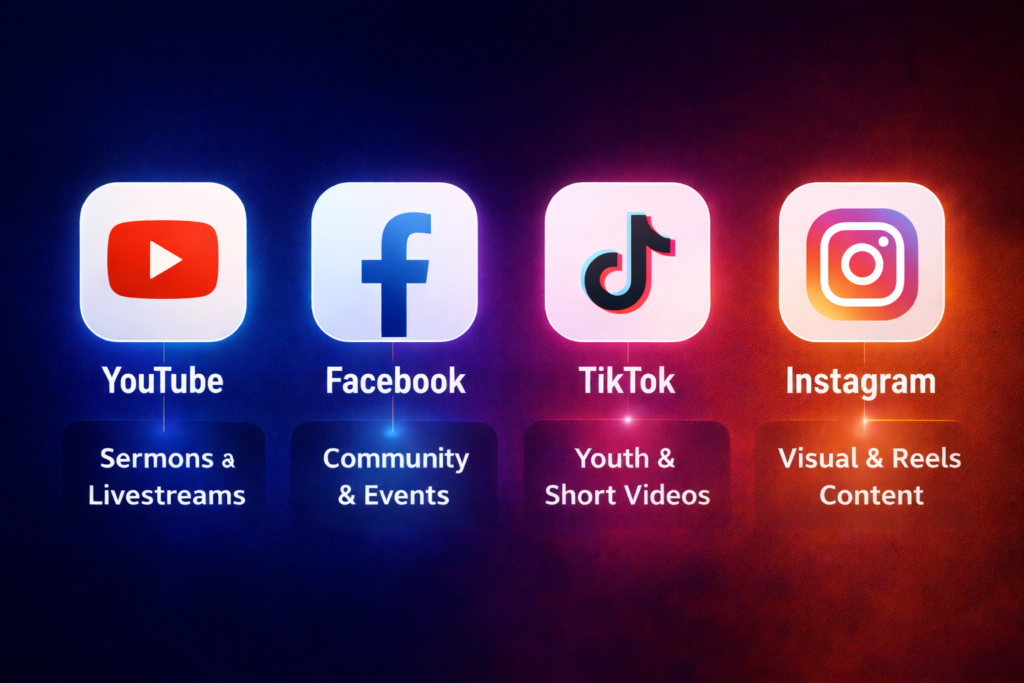
Not every platform serves the same purpose. Each has unique strengths, and churches must align platform selection with their goals.
Facebook is ideal for community engagement and event promotion. It allows longer captions, event creation, and group discussions.
Instagram works well for visual storytelling, sermon snippets, and Reels. It helps showcase church culture and behind-the-scenes moments.
YouTube is perfect for hosting full sermons, live streams, and teaching series. It also improves search visibility over time.
TikTok is effective for short-form inspirational content, youth engagement, and reaching audiences beyond existing followers.
Rather than trying to dominate every platform, churches should focus on doing a few well.
Step 4: Establish Clear Content Pillars
Content pillars are recurring themes that guide what the church posts. They prevent inconsistency and reduce creative burnout. Instead of wondering what to post each week, pillars provide structure.
Common church content pillars include sermon highlights, devotionals, testimonies, event promotions, community impact stories, and behind-the-scenes moments. These categories ensure balanced content that informs, inspires, and engages.
When pillars are defined, the church’s online presence becomes recognizable and cohesive.
Step 5: Build a Content Calendar
A content calendar transforms ideas into organized action. It outlines what will be posted, when it will be posted, and on which platform. Planning content weekly or monthly prevents last-minute stress and rushed designs.
A well-structured calendar includes service countdowns, sermon clips, engagement posts, and reminders. It also ensures consistency in branding and messaging. Over time, this consistency builds trust with the audience.
Planning ahead creates excellence. Excellence builds credibility.
Step 6: Invest in the Right Tools
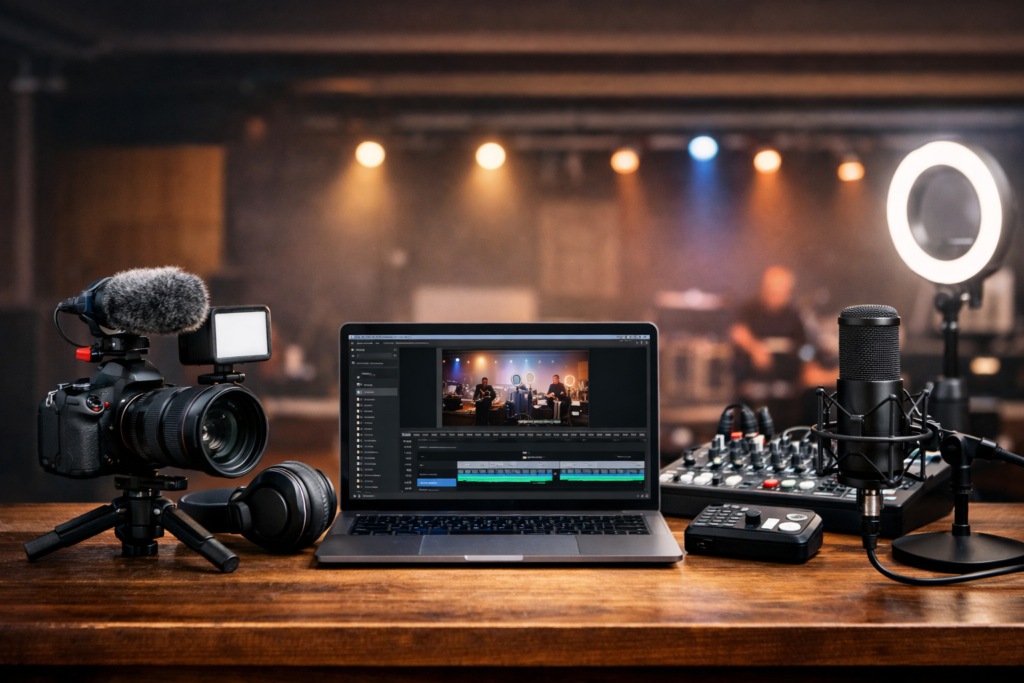
Quality production enhances credibility. While excellence does not require expensive equipment, it does require intentional investment.
A reliable camera improves visual clarity. A quality microphone ensures the message is heard without distortion. Proper lighting enhances professionalism. A capable editing laptop allows smooth content production. Most importantly, a stable high-speed internet connection ensures uninterrupted live streaming.
These tools do not replace spiritual depth, but they remove distractions that could hinder the message.
Step 7: Track and Measure Performance
Strategy without measurement is incomplete. Churches must evaluate what is working and what is not. Metrics such as engagement rate, watch time, shares, saves, and click-through rates provide insight into audience behavior.
Tracking performance helps refine future content. For example, if sermon clips consistently receive higher engagement than event flyers, more focus can be placed on teaching-based content.
Measuring results transforms social media from guesswork into informed decision-making.
Common Church Media Mistakes to Avoid
One common mistake is posting only flyers. While announcements are necessary, they rarely spark meaningful engagement. Another mistake is ignoring comments and messages. Social media is interactive; failing to respond weakens community connection.
Inconsistent branding also creates confusion. Colors, fonts, and tone should reflect the church’s identity. Finally, burnout often results from a lack of planning. When everything is urgent, nothing feels sustainable.
Avoiding these mistakes strengthens credibility and growth.
Conclusion: From Visibility to Impact
Church media is no longer optional. It is a vital extension of ministry. A strong church media strategy ensures that content is intentional, consistent, and aligned with vision.
Modern ministries must shift from random posting to purposeful communication. With clear goals, defined audience, structured content, proper tools, and measurable outcomes, churches can transform their digital presence into a powerful ministry platform.
In today’s world, strategy is not about being trendy. It is about being effective. And when churches approach the media with clarity and purpose, their message travels further than ever before.